
Former Detroit Tiger, Curtis Granderson now with the New York Mets named recipient of the 2016 Roberto Clemente Award, the most prestigious individual player award from Major League Baseball
The selection of Curtis Granderson was officially announced by Baseball Commissioner Robert D. Manfred, Jr. at a press conference prior to Game Three of the 112th World Series. Granderson is the fourth Mets player to win the Roberto Clemente Award, joining Gary Carter (1989), Al Leiter (2000) and Carlos Delgado (2006).
To get a really good perspective about where Curtis Granderson came from and where he is now, we busted out our September 2007 cover story for your reading pleasure. You can see that as far back as high school Curtis had a great head on his shoulders and was (is) a real community driven individual!
In Play! magazine spent time with Granderson before, during and after a game that summer, back when he was a Detroit Tiger.
Curtis Granderson, From the In Play! magazine September 2007 cover story….
By Michael Niziolek
One thing that gets lost in the media’s focus and discussion of scandals in sports is the player who does things the right way. Players don’t get headlines for playing hard everyday, no matter where they are in the lineup. Players don’t get on SportsCenter for taking time out for fans, win or lose and you don’t hear about players whose passion for the game matches his/her talent.
For two seasons Curtis Granderson has been that kind of player for the Detroit Tigers. Raised by two educators, Mary and Curtis Sr., in the suburbs of Chicago, Curtis is known around Detroit for his personable nature.
The 26-year old is a critical piece for the Tigers’ organization quest for another championship. A Center Fielder with tremendous speed, who leads off and can still hit for power. Teammate Craig Monroe calls Curtis the “sparkplug” of the team, a role that Monroe says Curtis flourishes in.
His athletic ability is great, but if you ask anybody in the organization they will tell you what stands out about Curtis over other players are his “smarts”. It’s something that Mary Granderson said to her son CJ, as he was known growing up, developed early on.
“At a young age he showed the ability to understand the game,” she says while watching Curtis with her husband Curtis Sr. and family at a Tigers’ home game in August. “At age two he would watch an entire baseball game. He knew when a batter hit the ball to run around the bases. A post in the basement would be first. He understood.”
After getting drafted out of University of Illinois at Chicago, Curtis joined the Tigers’ organization, but he let the team know that playing baseball would not force his education to take a back seat. He finished up his education with two degrees, one in business marketing and one in business management and rose quickly through the Tigers’ farm system.
The way he has gone about reaching this level makes Curtis’s mom most proud.
“I had a spot on the wall to put the degree, and he promised me he was going to finish after he got drafted,” Mary says. “I was excited at the prospect of him getting drafted, but I was even more excited about the fact that he committed to come back and finish college. I wanted my son not only to be a baseball player, but a college graduate as well.”
IPM sat down with Curtis at Transitions Barber Shop in Detroit to talk about what his journey has been like to get to the major leagues, playing for the Detroit Tigers, their recent success, and the work he does with his charity the Grand Kids Foundation.
IPM – For most people dreams of becoming a major league baseball player die after little league. Obviously for you that didn’t quite happen. Growing up, when did baseball start looking like a realistic career path?
CG – My sophomore year of college was the first time I actually started considering it. I received a couple of letters in high school to go to different try-out camps for the White Sox, Pirates, and the Reds. I still didn’t think too much about it, especially with not getting drafted out of high school.
So college comes around and sophomore year finishes up and going into my junior season there’s scouts starting to come out left and right. Throwing out psychological tests, to make sure I’m not crazy to play baseball. I get drafted and even once I got drafted I still wasn’t one hundred percent sure that I could make it through the minor league system and get up here. It’s still not 100%, anything can happen.
IPM – You ended up going to University of Illinois – Chicago, and speak fondly of your time there, go back for a second – what made you, as a senior in high school decide to commit to UIC?
CG – I took my recruiting trip there and the Head Coach Mike D was in full catcher’s equipment when I walked into practice. To see his interaction not only as a coach, but with the team itself, that stuck in my head. Also, getting a chance to play at home so my family could see me when they wanted to. Those were the two main things, plus they told me I could play right away.
One of the things I always tell kids that have a chance to go places and play sports somewhere, even if it’s not the best school, as long as you can get a chance to play that’s how you are going to be seen. I could have gone and sat on the bench at the national championship school, but that wouldn’t have done me anything to continue to play later on.
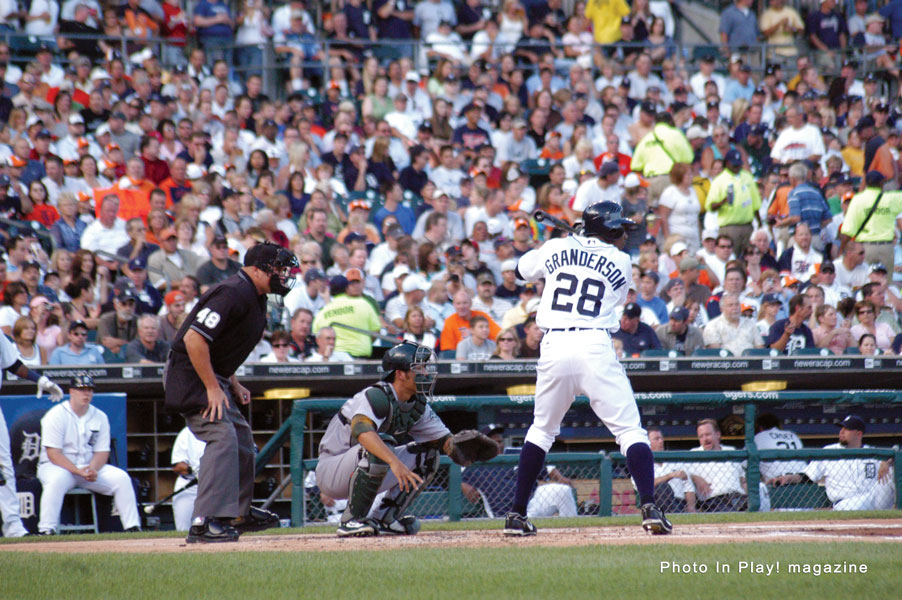
IPM – You get drafted by the Tigers when the team wasn’t doing so well. What was your reaction at the time like? Were you just happy to stay in the Midwest or did you have mixed feelings going to an organization who at the time looked stuck at the bottom of the Central?
CG – Happy to be drafted. I didn’t know too much about the Tigers, honestly, except for Alan Trammell and Lou Whitaker only because they were in RBI Baseball. That’s how I knew they had Cecil Fielder too. It was interesting, the fact that they are so close, but the Chicago market drowned them out because I didn’t see or hear too much about them.
Now it’s a learning process I get into the system start learning about Willie Horton and Al Kaline. And I was surprised people assumed that you know who they were, but being from Chicago I didn’t. That was fun…getting a chance to learn about those guys, I didn’t realize that Ty Cobb played here…never knew that.
Then joining an organization where hopefully if things go well I may get a chance because they aren’t the best team. They’re looking to improve, and if I can be one of those pieces I’m in a good situation.
IPM – Once you entered the Tiger’s farm system, you basically took off and didn’t look back. What was that like, almost four years of your life, being a top prospect and someone a lot of people thought could help turn around the organization?
CG – Interesting. I went from small cities to big cities. Oneonta, New York – a very small city to Erie, Pennsylvania an industrial city. Toledo was bigger than I expected. So getting a chance to go to all these different places, seeing top prospects from different teams and organizations and also our organization. And just trying to play, learn, and change, because each year I changed something. Whether it was my coaches and managers, my stance, my position, where I bat in the lineup and just trying to adapt to it and take it in stride. I think that’s what helped because every year there has always been something a little bit different for me.
IPM – It seems like everything fell into place for this team – right manager, right talent, and right time. Everybody will remember last year and the team, but IPM wants to know what was the 2006 season like for you on a personal level?
CG – Starting off the season in Kansas City, opening day – I think that was most memorable moment. The most exciting moment so far, knowing I had made the team, I was starting opening day. My name was on the roster and I was the lead off bat for the ’06 season. Then the highs of winning games, close games going from not selling out to selling out games.
Then in the playoffs and that electricity, cameras everywhere, interviews everywhere, people everywhere. Stuff I used to be at home for in the off-season, because either I was done with my minor league season or my big league season was done, now I’m getting a chance to be part of it. Everything was exciting.
IPM – The last two seasons, you guys have slumped a little bit in the second half, what does the team need to do to reach back for a little something extra?
CG – I think the big thing is to realize we do have 162 games and it’s going to happen. Teams are going to change their lineups from the beginning of the season to the middle season to the end of the season, with call ups, trades, and players being hurt. Try to stop a slide from happening as long as it can. You start losing two or three, you’ve got to figure out what the problem is, let’s go ahead and keep it at a two or three game losing streak versus a two week losing streak.
IPM – Anytime the Tigers are on TV and you make a play on defense, or step up to the batters box, it never fails we hear someone talk about what a great guy you are and tell a story about how they met you and you took time out to sign an autograph or say hello. Not every player takes that approach, why have you?
CG – I feel like I’m not different from anybody else, I’m just a person. Me and you are no different. Our jobs may be a little different, but that’s the main part. Early on I remember I did a project for high school we had to write a famous person and see if you could get a response back. I happen to choose Kirby Puckett, not realizing I wasn’t the only person writing at the time.
Now I understand that everybody writes athletes, I just asked for a response back and he sent back a card. He didn’t write anything, but for him to send something back. He did take time to go ahead write a fan, being from Chicago like he was, so I kind of pride everything after that.
IPM – You were born with tremendous athletic ability, but the thing we hear from your fellow players and your coaches is praise for your work ethic and passion for the game, something that a lot of contemporary athletes seem to lack. Where does that come from for you?
CG – I was one of those guys that never was the best on paper. I wasn’t the tallest, I wasn’t the fastest, I wasn’t the strongest. So I had to somehow continue to make my game stand out a little bit better and I knew there were different things I wasn’t good at. Whether it was playing this position, throwing this way, speed, strength. I’m going to go ahead and try to take that weakness and turn it into as much of a strength as I can.
I started to do that in high school, even more so in college. I knew I had to become a better hitter and started working, working, learning, asking questions, asking a lot of questions of a lot of different people and it’s become part of me. No matter what it happens to be, if it’s sports related or life related I’m just trying to find a better way to improve myself.
IPM – You’ve started the Grand Kids Foundation, talk a little bit about how that got started and what it’s all about?
CG – The main thing it deals with is education. The main side of it is no matter what happens, education is always going to be offered to you as a kid coming up, no one necessarily pushed you got to get straight ‘A’s’, you got to be the best math student out there. There’s so many different things you can do in the school environment to go ahead and become a successful person. Art, music, science, history, teaching, I just want to go ahead and influence kids to go ahead and take advantage of all those different opportunities they have.
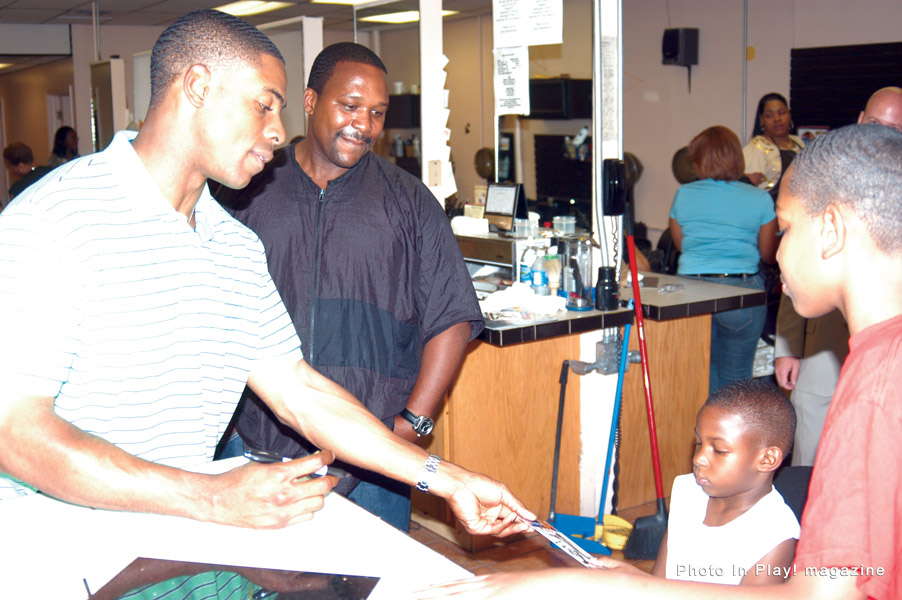 IPM – You obviously get to interact with a lot of kids and most look up to you as a role model. What’s it like to know your voice and your actions, both on and off the field, affects kids growing up and watching you?
CG – One of the things I remember back when I was in college is no matter what happens, if a person comes to a ball game, it may be their first or only game they’ll ever attend and they’re going to see something. Team win, team lose, a player do this, a player do that – I don’t want to leave an impression in that person’s head, a negative, if this is the only game they come to.
Win or lose I’m always going to look very similar. If I get a chance to talk to you, I will. I’m going to be nice, no matter what’s going in my day because it’s not the end of the world. I went 0-4, but I’m happy, I get a chance to play baseball. Tomorrow is going to be a new day, tomorrow is going to be a better day.
IPM – Since both your parents are educators, are they as proud of you for the Grand Kids Foundation as for your ability to make a leaping grab over the center field wall?
CG – They do enjoy it a lot. They like the fact that I’m a part of it and me going to both their schools to get a chance to talk and I think the most important thing playing baseball, school wise, was the fact that I did graduate. They enjoy that. They have all my diplomas from Kindergarten through college hung proudly in one of the rooms back at home.
IPM – In 15 years after you hang up the cleats when a writer, fan, or fellow player looks back on your career what would you like for them to say about Curtis Granderson?
CG – Hard worker, adapted very well no matter what the situation was. Enjoyed playing the game and never got too upset.